

The Hyperbaric Chamber for Dementia: Neurological Defense at the Cellular Level
The diagnosis of a neurodegenerative condition such as Alzheimer’s disease or vascular dementia is a profound biological and emotional crisis for both the patient and their entire family. The slow, relentless fading of cherished memories, the loss of basic daily orientation, and the gradual disappearance of a person's unique personality represent the most terrifying aspects of human aging. Traditional pharmacology has historically offered incredibly bleak prospects for these conditions. Standard medications merely attempt to temporarily boost neurotransmitter levels to delay the inevitable, but they completely fail to stop the underlying cellular decay destroying the cerebral cortex. However, the rapidly advancing field of regenerative neurology has unlocked a powerful, physical intervention to actively defend the brain. The strategic, daily application of a hyperbaric chamber for dementia is now scientifically recognized as the ultimate method for halting and potentially reversing cognitive decline.
By utilizing the undeniable laws of physics to drive highly purified oxygen directly across the blood-brain barrier, this therapy literally washes toxic proteins out of the brain, extinguishes chronic neuroinflammation, and forces dormant neurons to awaken. For families who refuse to passively accept the loss of a loved one's mind and wish to implement elite-level care at home, https://hyperbaricoxygentherapy.de/ offers the absolute pinnacle of premium soft-shell systems designed specifically for safe, autonomous neurological biohacking.
The Microscopic Reality of Cognitive Decline
To truly understand how we can biohack the central nervous system to protect memories, we must first deeply analyze the microscopic pathology of an aging brain.
Dementia is not simply a natural, unavoidable consequence of getting older. It is a highly specific, progressive cellular disease.
In the case of Alzheimer’s disease, the brain is actively attacked by the accumulation of toxic proteins.
The two primary culprits are beta-amyloid plaques and tau tangles.
Beta-amyloid plaques are sticky, dense protein fragments that build up in the spaces between the nerve cells (neurons). They act like biological cement, physically blocking the synapses and preventing the neurons from communicating with one another.
The Strangulation of Neurons: Tau Tangles
While the beta-amyloid plaques destroy the communication network on the outside of the cells, tau tangles destroy the neurons from the inside out.
Healthy neurons rely on an internal support structure made of microtubules, which transport essential nutrients and energy throughout the cell.
In a dementia patient, the tau proteins that normally stabilize these microtubules collapse and twist into tangled messes.
The transport system within the neuron completely disintegrates. Starved of nutrients and unable to clear their own internal waste, the neurons slowly suffocate, wither, and eventually undergo apoptosis (cellular death).
The hippocampus—the specific region of the brain entirely responsible for forming new memories—is usually the very first area to be destroyed by this biological strangulation.
Cerebral Hypoxia: The Silent Starvation
A second, equally devastating factor driving cognitive decline is a condition known as cerebral hypoxia (chronic oxygen starvation).
This is the primary driver of vascular dementia.
The human brain is an absolute metabolic furnace. Despite making up only 2% of your total body weight, it consumes a staggering 20% of the oxygen you breathe just to maintain basic cognitive functions.
As we age, the microscopic capillary blood vessels that feed the brain begin to calcify, stiffen, and physically shrink.
Because this vascular network degrades, the sheer volume of blood reaching the deep tissues of the cerebral cortex drops drastically. The brain is slowly, silently starved of its most critical fuel.
The Idling Neuron Theory
When a neuron is starved of oxygen, it does not immediately die.
Instead, it enters a state of metabolic hibernation to conserve its last remaining drops of energy.
These are known as "idling neurons." They have just enough ATP (cellular energy) to stay biologically alive, but they lack the energy required to fire electrical signals or form memories.
A dementia patient's brain is filled with millions of these dormant, sleeping neurons.
The application of high-pressure oxygen is required to bypass the damaged blood vessels and wake these idling neurons up from their metabolic coma.
The Physics of Deep Cerebral Rescue: Henry’s Law
How do we deliver life-saving energy to an inflamed, oxygen-starved brain when the capillary blood vessels are physically failing?
The blood-brain barrier heavily restricts what can enter the cerebral tissue. Red blood cells, which carry your oxygen, are simply too large to pass through aging, narrowed microscopic pathways.
The hyperbaric environment completely bypasses this failing delivery system by utilizing Henry’s Law of physics.
Henry’s Law dictates that a gas will dissolve directly into a liquid when subjected to increased atmospheric pressure.
When a patient rests inside a soft-shell chamber and the pressure gently rises, the rules of human neurology are fundamentally altered.
Flooding the Cerebrospinal Fluid with Oxygen
Because of the increased atmospheric pressure, the highly purified oxygen completely bypasses the reliance on red blood cells.
It dissolves directly into the blood plasma and, most importantly, directly into the cerebrospinal fluid (CSF).
Cerebrospinal fluid is the clear, watery liquid that completely bathes and cushions the brain and spinal cord.
Suddenly, the starving, toxic cerebral cortex is flooded with a massive, restorative tidal wave of pure, dissolved oxygen.
The strategic use of a hyperbaric chamber for dementia effortlessly crosses the blood-brain barrier. It delivers the exact molecular fuel the idling neurons desperately need to survive the metabolic crisis and turn their electrical signals back on.
Why We Uncompromisingly Reject Hard-Shell Chambers
A patient suffering from dementia or cognitive decline is in an incredibly fragile, easily confused, and highly vulnerable psychological state.
When families decide to invest in home neurological care, they are sometimes misdirected toward massive, clinical hard-shell chambers.
We take an absolutely uncompromising, highly ethical stance on this matter: For geriatric care and dementia patients, soft-shell chambers are the only safe and humane choice.
We actively and loudly warn our clients against the purchase of rigid, steel, or acrylic hard-shell systems.
The devastating drawbacks of hard-shell chambers for dementia:
-
Extreme Panic and Confusion: Placing a confused, disoriented dementia patient into a cold, rigid metal tube heavily mimics the terrifying sensation of an MRI scanner. It frequently triggers severe, primal panic and aggressive behavioral outbursts.
-
The Cortisol Catastrophe: Panic triggers the sympathetic nervous system, instantly flooding the injured brain with cortisol and adrenaline.
-
Destroying Memory Networks: Cortisol is highly neurotoxic to the hippocampus. If you spike a dementia patient's cortisol levels inside a terrifying hard-shell chamber, you actively accelerate the destruction of their memory centers, completely ruining the therapy.
The Elegant Serenity of Modern Soft-Shell Technology
Our cutting-edge soft-shell systems are meticulously engineered to provide maximum cerebral rejuvenation in an environment of total, luxurious peace.
They are crafted from multi-layered, industrially welded thermoplastic polyurethane (TPU), making them incredibly durable yet remarkably flexible and inviting.
Why soft-shells completely dominate the neuro-geriatric market:
-
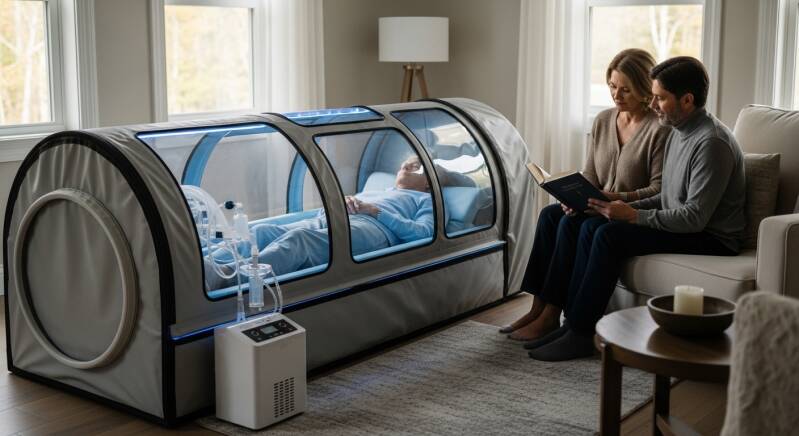
Caregiver Interaction: The massive, transparent viewing windows allow the patient to maintain constant visual contact with their family members. You can sit outside the chamber, read to them, or hold your hand against the window, providing immense psychological comfort.
-
Stress-Free Environment: The flexible walls and bright, airy space completely eliminate feelings of confinement. The environment feels like a cozy, futuristic resting pod.
-
Barrier-Free Accessibility: The intelligent dual-zipper systems and flexible entryways allow elderly patients with limited mobility to enter the chamber effortlessly. You can place a thick orthopedic mattress inside for absolute comfort.
-
Parasympathetic Dominance: The quiet, comfortable atmosphere forces the nervous system into a deep state of relaxation, physically lowering blood pressure and opening up the cerebral blood vessels.
The Absolute Gold Standard: 95.6% Oxygen Purity
There is a massive, fatal error that many families make when purchasing a brain-healing system.
They focus entirely on the atmospheric pressure of the chamber and completely ignore the gas quality.
Pressure alone does not clear amyloid plaques or produce cellular energy.
If you place a patient into a cheap imported chamber and merely compress standard room air (which is only 21% oxygen), you are filling their cerebral fluid with massive amounts of useless nitrogen.
To force a degenerating brain to physically rebuild itself, the breathing gas must be of the absolute highest medical-grade purity.
The hyperbaric chamber for dementia only performs its neurological miracles when paired with this absolute purity. Our premium home systems utilize industrial-grade continuous-flow concentrators that guarantee a staggering 95.6% oxygen purity.
Why Purity Dictates Cognitive Preservation
This specific metric—95.6% purity—is the undisputed holy grail in the cognitive longevity industry.
It is only at this extreme concentration that the mitochondria inside the surviving neurons are forced to operate at their absolute maximum capacity.
Mitochondria use this pure oxygen to synthesize massive amounts of Adenosine Triphosphate (ATP), the universal energy currency of the brain.
When the idling neurons are flooded with an endless supply of ATP, they wake up.
Families frequently report that after a series of sessions, the "lights come back on" in the patient's eyes. They begin to speak more clearly, remember recent events, and regain fragments of their lost personality.
The Glymphatic System: Washing the Brain
To truly understand how hyperbaric oxygen physically clears the brain of dementia, we must examine the brain's internal washing machine.
The brain possesses a highly specialized waste-clearance network called the glymphatic system.
During deep sleep, the glymphatic system literally shrinks the brain cells slightly, allowing cerebrospinal fluid to rush in and physically wash the toxic beta-amyloid plaques and tau tangles out of the brain tissue.
However, running this biological washing machine requires gigantic amounts of ATP energy.
In a dementia patient, the brain is starved of energy. The glymphatic system completely stalls, and the toxic garbage piles up inside the skull.
Supercharging the Cerebral Washing Machine
The hyperbaric chamber completely shatters this vicious cycle.
By flooding the cerebrospinal fluid with highly purified oxygen plasma, the chamber delivers a massive energy surplus directly to the cerebral cortex.
The brain uses this massive influx of ATP to supercharge the glymphatic system.
The biological washing machine goes into overdrive, aggressively flushing the accumulated amyloid plaques out of the brain tissue and into the liver for detoxification.
This physical removal of the neurotoxic debris is the absolute most critical step in halting the progression of Alzheimer's disease.
Silencing Neuroinflammation: Microglial Cells
Another massive driver of long-term cognitive decline is chronic neuroinflammation.
When the brain is injured by plaques, specialized immune cells called microglia are activated to clear the damage.
However, in dementia patients, these microglial cells become highly aggressive and stuck in the "on" position.
They continuously secrete highly toxic, inflammatory cytokines into the healthy brain tissue, creating a state of chronic, simmering inflammation that kills innocent, healthy neurons.
The 95.6% pure oxygen acts as the ultimate, natural fire extinguisher for the brain. It immediately signals the hyperactive microglial cells to stand down, silencing the inflammatory static that drives the disease forward.
Neuroplasticity: Rewiring Around the Damage
When portions of the hippocampus are irreversibly dead, the brain must physically build a "detour" around the dead tissue.
It must train entirely new, healthy areas of the brain to take over the lost memory functions. This miraculous biological ability is called neuroplasticity.
To build new neural pathways and forge new synapses, the brain requires a specific growth hormone called Brain-Derived Neurotrophic Factor (BDNF).
BDNF acts like a high-grade biological fertilizer for the neurons, actively encouraging them to sprout new connections.
Rigorous clinical research proves that hyperbaric oxygen therapy creates a massive, systemic spike in BDNF production. The brain is flooded with this crucial growth factor, allowing it to rapidly rewire itself and restore lost cognitive agility.
Angiogenesis: Rebuilding the Brain's Blood Supply
To ensure the newly rewired brain tissue survives long-term, it requires a permanent, robust blood supply to replace the capillaries that decayed with age.
The consistent daily stimulus of 95.6% pure oxygen under pressure triggers a physiological process called angiogenesis.
Angiogenesis is the biological sprouting and growth of entirely new, microscopic capillary blood vessels.
The body physically builds a brand-new vascular highway system directly into the ischemic, oxygen-starved areas of the cerebral cortex.
This secures a permanent flow of nutrients to the recovering brain tissue, radically lowering the risk of further vascular dementia and solidifying the patient's cognitive gains.
Alleviating Sundowning and Severe Agitation
One of the most exhausting and heart-wrenching challenges for caregivers is managing the severe agitation and aggression that dementia patients often experience.
This behavioral crisis typically peaks in the late afternoon and evening, a phenomenon widely known as "Sundowning."
Sundowning is caused by a completely exhausted, inflamed central nervous system that is trapped in a state of sympathetic (fight-or-flight) panic.
The safe, comforting, and deeply relaxing environment of the soft-shell chamber acts as a profound neurochemical reset button.
The gentle pressure physically forces the autonomic nervous system into parasympathetic dominance. Cortisol levels plummet. Caregivers consistently report that a 60-minute session in the late afternoon completely eradicates the Sundowning agitation, leaving the patient remarkably calm, happy, and cooperative for the rest of the evening.
Stem Cell Mobilization for True Brain Repair
The absolute pinnacle of neuro-regeneration is the body's ability to deploy its own stem cells.
Stem cells are pluripotent, meaning they are "blank slate" cells that can literally transform into brand-new neurons or glial cells in the brain.
Under normal circumstances, an elderly body releases virtually zero stem cells from the bone marrow.
However, clinical research definitively proves that the specific combination of gentle pressure and high-purity oxygen provides a massive mechanical stimulus to the bone marrow.
It triggers the exponential release of millions of fresh stem cells directly into the bloodstream. These cells cross the blood-brain barrier, home in on the damaged memory centers, and initiate true, structural cellular replacement.
Synergies: Exogenous Ketones, MCT Oil, and Oxygen
The soft-shell chamber is the ultimate biological engine for neuro-regeneration, but to maximize the results, you must supply the brain with the correct fuel.
Modern neurology increasingly views Alzheimer's disease as "Type 3 Diabetes." The aging brain develops severe insulin resistance and loses the ability to use glucose (sugar) for energy.
If the brain cannot process sugar, the neurons starve. The perfect alternative fuel for a damaged brain is ketones.
Before a session in the hyperbaric chamber for dementia, provide the patient with high-quality MCT oil (C8) or exogenous ketones.
When the patient digests these ketones and steps into the 95.6% pure oxygen environment, the pressure drives this premium fuel directly across the blood-brain barrier. The brain easily burns the ketones in the oxygen-rich environment, creating an unparalleled anabolic explosion of cerebral energy that shatters brain fog instantly.
A Proven Protocol for Home Cognitive Care
How do families effectively integrate this powerful technology into a daily home caregiving routine?
When attempting to rebuild the central nervous system of an elderly patient, absolute, unrelenting consistency and extreme patience are required.
-
The Intensive Reprogramming Phase: In the first three months, the patient should complete 5 to 6 sessions per week. This creates a constant, inescapable oxygen-rich environment that forces the brain to flush the plaques and adapt.
-
Session Duration: Every session must last between 60 and 90 minutes to ensure the cerebrospinal fluid is fully saturated.
-
Pressurization: Allow the pressure to build extremely slowly. An elderly patient's vascular system is fragile, and they may struggle to communicate ear pressure. Prioritize gentle, stress-free pressurization.
-
The Healing Routine: Make the chamber session a beautiful, bonding experience. Sit beside the transparent window, play their favorite classical music or old familiar songs outside the chamber, and allow them to drift into a deep, highly oxygenated sleep.
The Economic Reality of Memory Care Facilities
Many families hesitate when considering the initial investment in a premium home neuro-rehabilitation system.
However, you must brutally calculate the staggering, terrifying costs of long-term cognitive decline.
The financial reality of a specialized memory care facility or full-time, in-home dementia nursing is utterly catastrophic. These services easily cost tens of thousands of euros every single month, rapidly draining lifelong savings and generational wealth.
Furthermore, transporting a confused, frightened dementia patient to a commercial hyperbaric clinic for the 60 to 100 sessions required for true neurological repair is a logistical nightmare and financially exorbitant.
Purchasing your own premium soft-shell system is the most profound economic and health decision a family can make. It transforms an endless, recurring nightmare of medical expenses into a single, highly effective investment. You secure 24/7 access to the absolute pinnacle of neuro-regenerative technology, keeping your loved one exactly where they belong: safe at home.
Conclusion: Defend Their Memories
A dementia diagnosis is a devastating biological event, but the rapid, total loss of a loved one's mind does not have to be your accepted reality.
The science of neurology has definitively proven that we can wake up dormant brain cells, extinguish neuroinflammation, physically wash toxic plaques out of the skull, and force the brain to rewire its own damaged networks.
The dedicated, daily application of a hyperbaric chamber for dementia is the most powerful, scientifically validated intervention on earth to aggressively defend the brain from the inside out.
Do not subject your fragile loved one to the claustrophobia, noise, and panic-inducing nightmare of outdated hard-shell steel cylinders. Elevate their care protocol with the elegant safety, total visual transparency, and luxurious comfort of our cutting-edge soft-shell chambers.
With the absolute gold standard of 95.6% oxygen purity, we guarantee that their brain receives the exact premium molecular fuel required to restore focus, eradicate agitation, and protect their precious memories.
Stop passively watching the disease steal the person you love. Take absolute, aggressive control of their cognitive defense. Visit https://hyperbaricoxygentherapy.de/ today, select your perfect home system, and make the ultimate investment in a brighter, sharper, and deeply connected future.