

The Hyperbaric Chamber for Ligament Healing: Cellular Repair for Connective Tissue
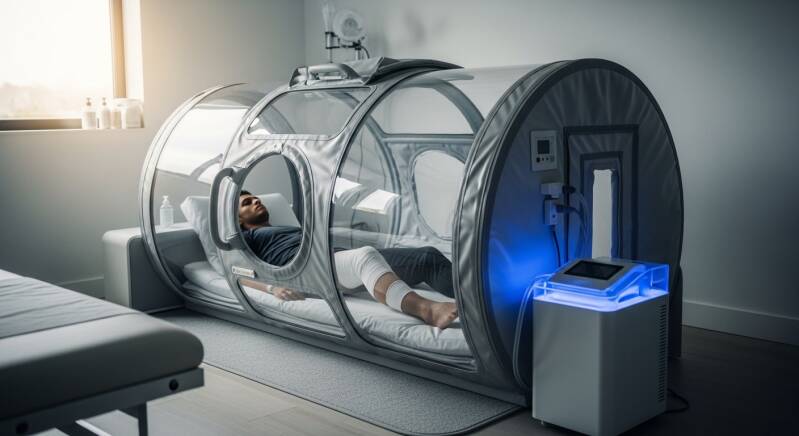
There is a terrifying sound that every active individual and professional athlete dreads more than anything else: the sudden, sharp pop of a tearing joint. Whether it is a ruptured Achilles, a torn anterior cruciate ligament (ACL), or a severely strained rotator cuff, joint injuries are devastating.
Unlike a simple muscle strain, a damaged joint often dictates months of grueling rehabilitation, painful surgeries, and agonizing periods of complete immobility. The traditional medical advice usually consists of rest, ice, compression, and elevation (the RICE method).
However, modern regenerative medicine has proven that passive waiting is no longer the optimal strategy for tissue repair. The proactive use of a hyperbaric chamber for ligament healing is completely rewriting the timelines for orthopedic recovery.
By utilizing the laws of physics to force highly purified oxygen deep into the avascular structures of your joints, this technology triggers a massive cascade of cellular regeneration. For athletes and active individuals who refuse to be sidelined for months, https://hyperbaricoxygentherapy.de/ offers the most advanced soft-shell systems for safe, daily home therapy.
The Anatomy of Connective Tissue
To truly understand why your joints heal so agonizingly slowly, we must examine the fundamental biology of connective tissue. Ligaments are tough, fibrous bands of tissue that connect bone to bone.
Tendons are similar structures that connect muscle to bone. Both of these tissues are designed for immense mechanical tensile strength.
They act as the critical shock absorbers and stabilizers of your entire skeletal framework. Because they need to be incredibly dense and tough to withstand physical impact, nature designed them with a major biological flaw.
They are notoriously avascular, meaning they have an incredibly poor natural blood supply. When you look at a healthy muscle, it is deep red because it is packed with microscopic blood vessels. When you look at a ligament, it is stark white.
The Curse of Avascular Tissue
This lack of blood flow is the exact reason why a broken bone or a torn muscle will often heal twice as fast as a severe sprain.
When connective tissue is torn, the body desperately tries to send nutrients, immune cells, and oxygen to the injury site to begin repairs.
However, because the vascular network in a joint is so sparse, this delivery system is fundamentally broken from the start.
The essential building blocks of cellular repair simply cannot reach the center of the tear. The tissue is forced to rely on a slow, inefficient process called diffusion, where nutrients merely seep in from the surrounding synovial fluid.
The Problem of Post-Traumatic Swelling
This biological bottleneck is immediately worsened in the seconds following the injury.
When the tissue tears, the body triggers an immediate and massive inflammatory response. The joint capsule rapidly fills with fluid, causing severe swelling (edema).
While this swelling is meant to immobilize the joint to prevent further damage, it creates a devastating secondary problem.
The immense mechanical pressure from the swelling physically crushes and collapses the few tiny blood vessels that actually exist around the joint.
The injured tissue is suddenly entirely cut off from its oxygen supply, plunging it into a state of acute cellular hypoxia (oxygen starvation).
The Physics of Cellular Rescue: Henry’s Law
Without oxygen, the cells inside the joint cannot produce the ATP (cellular energy) required to clear away dead tissue or weave new collagen fibers.
This is the exact moment where the hyperbaric chamber steps in to bypass your biological limitations.
It utilizes a fundamental principle of physics known as Henry’s Law. This law states that the concentration of a gas dissolved in a liquid is directly proportional to the pressure of that gas above the liquid.
Under normal atmospheric conditions, oxygen is strictly carried by red blood cells. These cells are far too large to squeeze through the crushed, swollen capillaries of an injured knee or ankle.
Bypassing the Biological Bottleneck
When you enter the chamber and the atmospheric pressure is gently increased, the rules of oxygen transport change completely.
The oxygen is no longer reliant on the red blood cells. Instead, it dissolves directly into the watery blood plasma and the lymphatic fluid.
Blood plasma is incredibly fluid and has a microscopic molecular size. It can easily flow past extreme swelling and permeate the dense, white, avascular structures of your joints.
Suddenly, your starving, traumatized connective tissue is flooded with a tidal wave of highly concentrated oxygen. The cellular energy factories (mitochondria) turn back on, and the healing process shifts into overdrive.
Why We Uncompromisingly Reject Hard-Shell Chambers
When athletes are desperate to return to the field, they often rush into purchasing the first piece of equipment they see.
This often leads them to massive, clinical hard-shell chambers (rigid steel or acrylic tanks).
We take a definitive, ethical stance on this matter: For home use and athletic recovery, soft-shell chambers are the only logical and safe choice.
We actively advise against the purchase of hard-shell chambers for private residences.
The devastating drawbacks of hard-shell systems:
-
Logistical Nightmares: They weigh hundreds of kilograms, requiring structural floor reinforcements and making them impossible to move.
-
Severe Claustrophobia: The rigid, confining metallic tubes trigger immense panic and claustrophobia in a large percentage of users.
-
Cortisol Spikes: Panic triggers the sympathetic nervous system, flooding the body with cortisol and adrenaline. Adrenaline constricts blood vessels, entirely ruining the healing effect you are trying to achieve.
The Elegant Healing of Modern Soft-Shell Technology
Our cutting-edge soft-shell systems are engineered to eliminate every single drawback of the outdated hard-shell models.
They are crafted from multi-layered, industrially welded thermoplastic polyurethane (TPU), making them exceptionally strong yet totally flexible.
Why soft-shells dominate the biohacking recovery market:
-
Stress-Free Healing: The flexible walls and massive, transparent viewing windows create a bright, airy environment that eliminates feelings of confinement.
-
Total Autonomy: The intelligent dual-zipper systems allow an injured athlete to enter, pressurize, and exit the chamber completely unassisted.
-
Ultimate Portability: You can set the chamber up in your living room while on crutches, and easily pack it into the trunk of your car when moving.
-
Parasympathetic Activation: The quiet, comfortable environment forces the nervous system into a deep state of relaxation, optimizing blood flow to your injured joints.
The Absolute Gold Standard: 95.6% Oxygen Purity
There is a fatal error that many consumers make when purchasing a home system. They focus exclusively on the pressure of the chamber.
Pressure is completely useless if the gas you are breathing lacks therapeutic value.
If you get into a chamber and merely compress standard room air (which is only 21% oxygen), you are filling your blood plasma with massive amounts of useless nitrogen.
To force a torn joint to regenerate, the breathing gas must be of the highest possible medical-grade concentration.
The hyperbaric chamber for ligament healing only performs its cellular miracles when paired with absolute purity. Our premium home systems utilize industrial-grade continuous-flow concentrators that guarantee a staggering 95.6% oxygen purity.
Why This Purity Dictates Your Recovery Timeline
This specific metric—95.6% purity—is the undeniable gold standard in orthopedic biohacking.
It is only at this extreme concentration that the fibroblasts (the cells that build new tissue) are forced to operate at maximum capacity.
Furthermore, this extreme purity acts as a massive systemic anti-inflammatory. It suppresses the release of pro-inflammatory cytokines inside the swollen joint capsule.
You are providing your body with the exact, highly refined molecular fuel it requires to conduct heavy structural repairs. Accepting anything less than 95.6% purity means accepting a slower, weaker recovery.
The Critical Role of Fibroblasts
Let us dive deeper into the microscopic construction site inside your injured joint.
When a ligament is torn, it does not simply glue itself back together. It must be rewoven from scratch.
The microscopic workers responsible for this weaving process are called fibroblasts.
Fibroblasts manufacture collagen, the primary protein scaffolding of your entire musculoskeletal system.
The process of synthesizing collagen is notoriously oxygen-dependent. If the fibroblasts are operating in a low-oxygen environment (like a swollen, avascular joint), they panic and rush the repair job.
Type I vs. Type III Collagen
When fibroblasts are starved of oxygen, they rapidly produce Type III collagen.
Type III collagen is essentially biological duct tape. It is a disorganized, brittle, and highly inflexible form of scar tissue.
If your joint heals with Type III collagen, it will remain stiff, painful, and highly susceptible to tearing again the moment you return to sports.
By utilizing the hyperbaric chamber for ligament healing, you flood these fibroblasts with an ocean of pure oxygen.
This optimal environment allows them to take their time and synthesize Type I collagen. Type I collagen is beautifully organized, incredibly strong, and highly elastic—matching the exact structural integrity of the original, uninjured tissue.
Rapid Eradication of Joint Edema
The most immediate and visible benefit of hyperbaric therapy is the dramatic reduction in swelling (edema).
Highly concentrated oxygen under pressure acts as a potent vasoconstrictor.
This means it signals the leaky, inflamed blood vessels surrounding the injury to gently constrict and tighten up.
This immediate tightening stops the excessive bleeding and fluid leakage into the joint capsule.
The mechanical pressure of the swelling is rapidly reduced, taking the agonizing pressure off your local nerve endings. Athletes often report massive pain relief after just their very first session.
Angiogenesis: Building a Permanent Vascular Network
While reducing swelling is fantastic for immediate pain relief, the ultimate goal is permanent, long-term healing.
To ensure the joint stays healthy forever, it needs a better permanent blood supply.
The consistent daily stimulus of 95.6% pure oxygen under pressure triggers a miraculous biological process called angiogenesis.
Angiogenesis is the physiological sprouting and growth of entirely new, microscopic capillary blood vessels.
Your body physically builds a brand-new vascular highway system directly into the previously avascular joint tissue.
Protecting Your Joints for the Future
Because of this newly formed vascular network, your healed ligament will now receive significantly more blood flow than it did before the injury.
This means that long after your rehabilitation is finished, that specific joint remains highly nourished and oxygenated.
It becomes drastically more resilient to future mechanical stress and micro-trauma.
This is why elite athletes do not just use the chamber when they are injured; they use it proactively to fortify their connective tissue against the brutal demands of their sport.
Stem Cell Mobilization: The Ultimate Biohack
If angiogenesis is the highway, stem cells are the ultimate biological repair crew traveling on it.
Stem cells are pluripotent, meaning they are "blank slate" cells that can transform into any specific type of tissue the body requires—including new cartilage, tendon, or ligament cells.
Clinical research has definitively proven that the specific combination of pressure and high-purity oxygen provides a massive stimulus to the bone marrow.
The bone marrow is tricked into releasing millions of fresh, highly active stem cells directly into the bloodstream.
These stem cells circulate through your body, identify the chemical distress signals coming from your torn joint, and migrate directly to the injury site to begin total tissue regeneration.
Post-Surgical Healing (ACL and Meniscus Repairs)
Sometimes a tear is so severe that a surgical intervention (like an ACL reconstruction or meniscus repair) is absolutely unavoidable.
However, surgery itself is a massive mechanical trauma. The surgeon cuts through skin, fascia, nerves, and blood vessels to reach the joint.
The postoperative recovery period is often brutal, painful, and fraught with the risk of infection.
Using a hyperbaric chamber for ligament healing immediately upon returning home from the hospital completely changes the postoperative trajectory.
The hyper-oxygenated blood plasma keeps the surgically grafted tissue alive during the critical first few weeks before it establishes its own blood supply.
Preventing Postoperative Necrosis and Infection
One of the greatest risks after joint surgery is tissue necrosis (tissue death) at the graft site.
If the newly implanted tendon graft does not receive oxygen quickly enough, it will die and the surgery will fail.
The hyperbaric oxygen forces life-saving ATP into the graft, ensuring its survival.
Furthermore, the 95.6% pure oxygen environment is highly toxic to anaerobic bacteria—the primary culprits behind devastating hospital-acquired infections (like MRSA).
By utilizing the chamber daily, you turn your body into a highly oxygenated fortress, drastically lowering the risk of postoperative complications.
Synergies: Nutrition for Tendon Repair
The chamber is your ultimate biological engine, but it cannot build a house without bricks.
To maximize the hyperbaric effect, you must supply your body with the exact raw materials required for collagen synthesis.
Combine your daily chamber sessions with heavy supplementation of Vitamin C. Fibroblasts absolutely require Vitamin C as a cofactor to weave the strands of collagen together.
Additionally, consume high-quality hydrolyzed collagen peptides and essential amino acids (like glycine and proline) roughly 45 minutes before entering the chamber.
The physical pressure of the chamber will aggressively drive these circulating nutritional building blocks deep into the avascular joint capsule, creating an unparalleled anabolic healing environment.
A Proven Protocol for Home Recovery
How do you effectively integrate this powerful technology into your daily rehabilitation routine?
When dealing with connective tissue, consistency is the absolute, non-negotiable law of healing.
-
The Acute Phase: In the immediate weeks following the tear or surgery, you must complete 5 to 6 sessions per week. This daily consistency prevents the tissue from ever falling back into a state of hypoxia.
-
Session Duration: Every session should last between 60 and 90 minutes. It takes time for the blood plasma to reach maximum saturation and penetrate the dense white tissue.
-
Pressurization: Allow the pressure to build very slowly and gently. Your body is already traumatized; there is no need to rush the descent.
-
The Healing Routine: Make the chamber your absolute sanctuary of peace. Turn off your phone, close your eyes, and allow your autonomic nervous system to shift into deep rest while the oxygen performs the heavy lifting.
The Psychological Impact of Athletic Injury
We must also address the severe psychological toll that a major joint injury takes on an active individual.
Being suddenly stripped of your mobility, your sport, and your daily endorphin release often leads to deep depression and anxiety.
You feel helpless, entirely dependent on doctors and physical therapists for your progress.
Investing in a premium home system gives you back your agency. You are no longer passively waiting to heal.
Every single day you step into that chamber, you are taking aggressive, proactive, and scientifically validated action toward your own recovery. This psychological empowerment drastically lowers stress hormones and promotes a positive healing mindset.
The Economic Reality of Faster Healing
Many individuals hesitate when considering the investment in a premium soft-shell home system.
However, you must calculate the true, hidden costs of a prolonged injury.
Months of lost productivity at work, endless copays for physical therapy, expensive pain medications, and the sheer loss of your quality of life accumulate rapidly.
Visiting a commercial hyperbaric clinic is logistically exhausting when you are on crutches, and paying per session will quickly exceed the cost of owning the equipment.
By purchasing your own system, you secure 24/7 access to elite-level medical technology in the total privacy of your own home, guaranteeing that your rehabilitation proceeds at the absolute maximum biological speed.
Conclusion: Refuse the Standard Timeline
A severe tear to a ligament or tendon is a brutal setback, but you do not have to accept the slow, agonizing recovery timelines dictated by traditional medicine.
The science of cellular biology has proven that we can bypass the avascular nature of our joints and force high-quality tissue regeneration through the application of physics.
The dedicated use of a hyperbaric chamber for ligament healing is the most powerful, non-invasive method on earth for eradicating swelling, stimulating stem cells, and weaving indestructible Type I collagen.
Do not subject your stressed body to the claustrophobia and logistical nightmare of rigid hard-shell systems. Trust in the unmatched comfort, elegant safety, and total autonomy of our cutting-edge soft-shell chambers.
With the absolute gold standard of 95.6% oxygen purity, we guarantee that your traumatized joints receive the exact premium molecular fuel required to rebuild stronger than ever before.
Stop passively icing your injuries and hoping for the best. Take absolute control over your biological repair. Visit https://hyperbaricoxygentherapy.de/ today, select the perfect home system, and make the ultimate investment in your structural integrity and your athletic future.